Conspiracism is killing us — and our democracy
More and more mass killings are being fueled by conspiracy theories, but that's only the half of the threat they pose.
It’s not a coincidence that there is a powerful thread running through a number of recent scenes of mass violence, connecting them not just thematically but in terms of causation. The connective tissue is one we’ve become familiar with, to the point now that it’s almost taken for granted: a powerful belief in conspiracy theories, so deep that the perpetrators of the violence become unhinged.
Anthony Polito, the 67-year-old former professor who went on a shooting rampage on the University of Las Vegas-Nevada campus this week, killing three people and then himself, was a frothing conspiracist who had a website titled “Powerful Organizations Bent on Global Domination!” On it, he wove a fairly typical web of unhinged theories about “globalists” and their “dark agenda,” including a video featuring antisemitic “Rothschild family” tropes. He also subscribed to a number of conspiracist accounts on YouTube.
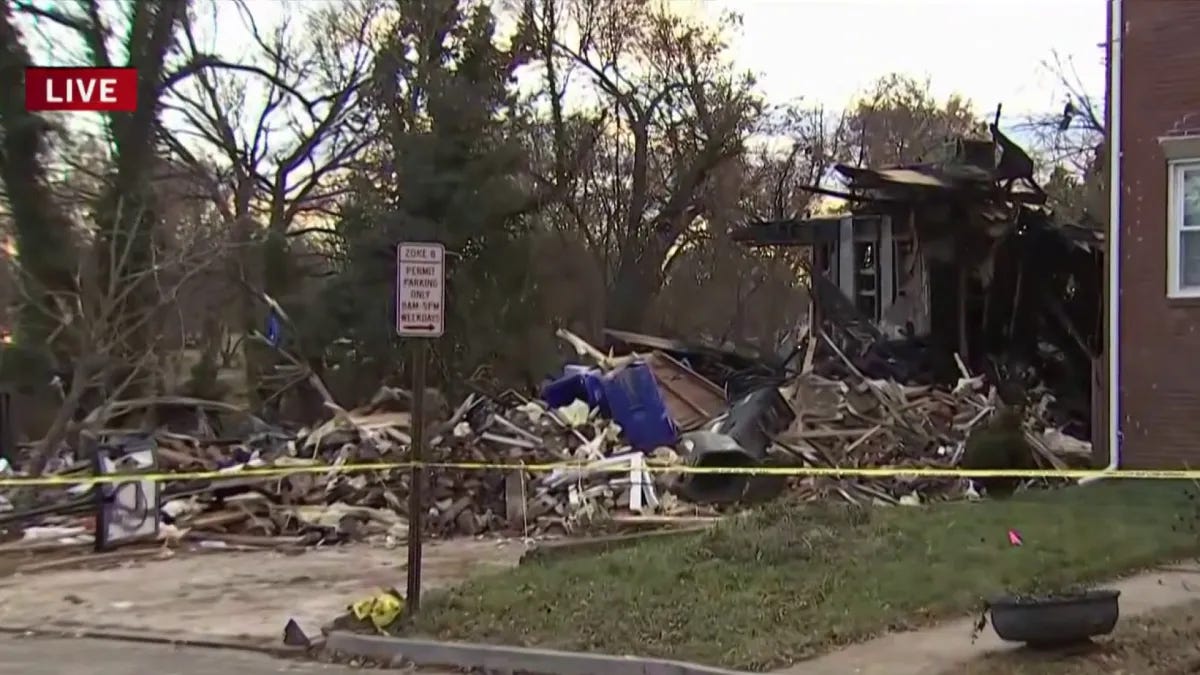
James Yoo, who detonated a house full of explosives in a quiet Arlington, Va., neighborhood that destroyed his home (and killed him) and caused widespread damage when police tried to arrest him for firing a flare gun from his residence, had a long history of conspiracist rantings. Yoo recently promoted the conspiracy theory that the Jan. 6 Capitol siege was actually an inside job dubbed the “Fedsurrection.” “THEY do not want an actual ‘coup’ against THEM so THEY rig, orchestrate and control a FAKE ‘Jan 6th’ ‘event,’ ‘riot’ and then RIG trials to set FAKE precedence in attempts to scare and control the People’s minds,” Yoo wrote. Yoo’s far-right, pro-Trump conspiracism dates back to at least 2018, when he filed a lawsuit claiming he had been hospitalized against his will by a cabal of federal conspirators linked to Special Counsel Robert Mueller’s investigation into the 2016 election. His most recent posts indicated he believed his neighbors were part of the plot.
An Arizona man, 58-year-old Donald Day, was arrested last week after being indicted for making interstate threats that led to police shootings in Australia, all of them products of his conspiracist cult that spews “Great Reset” conspiracy theories. In December 2022, Gareth and Nathaniel Train, two brothers who were part of Day’s cult and building a survivalist “ark” in rural Queensland, Australia, ambushed and gunned down two police officers and a neighbor when police made inquiries into Nathaniel’s whereabouts, then engaged police in a six-hour siege during which they and Gareth’s wife, who participated in the shootings, were killed. Day’s rhetoric since then has escalated to include threats against wind-turbine projects in Arizona.
Robert Card, the mentally ill veteran who went on a killing rampage in Lewiston, Maine, in October, that left 18 people dead was also an avid consumer of and participant in conspiracy theories, and heard voices telling him to target his victims. Prior to the rampage, Card was spending much of his time on antigovernment websites, law enforcement sources said.
Mauricio Garcia, the 33-year-old man from Allen, Texas, who walked into a Dallas-area mall last May and opened fire, killing eight people and wounding seven, was an ardent conspiracy theorist who especially embraced antisemitic theories. He also frequently expressed misogynistic views and embraced so-called “incel”-style conspiracism and “black pilling.”
David DePape, the man who broke into the home of House Speaker Nancy Pelosi and viciously attacked her husband with a hammer in October 2022, spouted a variety of far-right conspiracy theories in explaining his motivation for the attack. DePape embraced the QAnon-based belief that Hollywood and political elites like Pelosi were part of a global cabal promoting and facilitating the sexual abuse and trafficking of children.
Igor Lanis, a 53-year-old resident of Walled Lake, Michigan, became so angry over his family’s rejection of his QAnon-derived beliefs in conspiracy theories—including his insistence that Donald Trump won the 2020 election—that in September 2022, he got out his shotgun and shot them all, killing his wife and the family dog while wounding his daughter. He was fatally shot by police when they arrived.
A Lawrence, Kansas, man named Rodney Marshall who embarked on a July 2022 shooting rampage in which he targeted two people and shot at an officer during a police chase, was a conspiracy theorist who believed he was uncovering a pedophilic human-trafficking ring. Prior to the shootings he had hidden out in a hotel room and told his companion that ATMs would be shutting down and that aliens were involved.
These are, of course, only some of the most recent such cases, most of which could be—if the right-wing political component of the conspiracist beliefs motivating them were properly taken into account—could and should be considered instances of domestic terrorism, as were many of the acts included in a terrorism database I coauthored in 2019. Terrorism necessarily has an ideological frame, and law enforcement has long stipulated the acts occur in the context of discrete political ideologies before considering them such. However, some conspiracy theories are often ideological only secondarily and frequently exist in their own idiosyncratic bubble of extremism.
What’s unquestionable, however, is that we are seeing more and more instances in which the conspiracy theories themselves become motives for the criminal and terroristic violence, especially when the perpetrator’s politics aren’t clear or are mixed. Even when they are known, the terroristic component of the act is often overlooked as the crimes are written off as just kooky conspiracism.
Indeed, a report by the Secret Service released earlier this year found that, while personal grievances comprised the most common motive, about 25 percent of all mass attackers were motivated by conspiracy theories of various stripes. “About a quarter, they maintained some kind of conspiracy theory beliefs, so they believed, for example, that 9/11 and the moon landing never happened, that the U.N. was sending an armed force to come take away everyone’s guns," said Lina Alathari, the chief of the Secret Service’s National Threat Assessment Center.
FBI analysts have also come to recognize this. A 2019 agency memorandum reported:
The FBI assesses anti-government, identity based, and fringe political conspiracy theories very likely motivate some domestic extremists, wholly or in part, to commit criminal and sometimes violent activity. The FBI further assesses in some cases these conspiracy theories very likely encourage the targeting of specific people, places, and organizations, thereby increasing the likelihood of violence against these targets.
The analysis further noted that “these conspiracy theories very likely will emerge, spread, and evolve in the modem information marketplace, occasionally driving both groups and individual extremists to carry out criminal or violent acts.”
The prevalence of conspiracism in so many instances of domestic terrorism observed in our database, as well as its frequent appearance in so many other instances of tragic domestic and neighborhood violence, was a major concern of my 2020 book, Red Pill, Blue Pill: How to Counteract the Conspiracy Theories That Are Killing Us. As I explained:
Peter Neumann, of the U.K.’s Centre for the Study of Radicalisation, identifies six steps on the ladder of extremist belief. “The first two of these processes deal with the consequences of being exposed to extremist content,” he writes. “No single item of extremist propaganda is guaranteed to transform people into terrorists. Rather, in most cases, online radicalization results from individuals being immersed in extremist content for extended periods of time, the amplified effects of graphic images and video, and the resulting emotional desensitization.”
Beheading videos, photos of corpses, suicides, and mass murders, all these things are part of these first two steps in the immersion process. Neumann calls this mortality salience—material intended to create an overpowering sense of one’s own vulnerability to death, as well as to heighten the viewer’s moral outrage.
The next two steps are also key to the process—namely, immersion in extremist forums, where deviant and extremist views are normalized, and online disinhibition, wherein people lose their normal inhibitions about violence because of their relative anonymity online. “Some of the participants get so worked up that they declare themselves ready to be terrorists,” notes psychologist Marc Sageman. “Since this process takes place at home, often in the parental home, it facilitates the emergence of homegrown radicalization, worldwide.”
The final stages occur when online role-playing occurs—the kind in which new recruits more or less practice their ideology in gaming situations, often in the context of modern video games. The participants project themselves into their gaming avatars, giving themselves traits that they usually do not possess in real life. After a while, this divide becomes noticeable and drives further radicalization: “[A]fter recognizing the gap between their avatar’s mobilization and their own physical mobilization, many online participants begin taking steps to reconcile the gap,” observe researchers Jaret Brachmann and Alex Levine. This is when they take the last step: using the Internet to connect directly to terrorist infrastructures that then begin to mobilize them.
The product of this dynamic is a seemingly endless string of red-pilled mass killers leaving their bloody marks on the American landscape. And the more of them there are, the more we’re seeing mass violence motivated primarily by conspiracy theories.
The largest mass killing in American history—the Oct. 1, 2017, massacre at the a country-music festival in Las Vegas by an unhinged conspiracy theorist who killed 58 people and wounded another 851—was in fact just such an incident, even though the official investigation by law enforcement was unable to find a motive. However, as part of our assessment of data and information in the course of compiling that domestic-terrorism database for the Center for Investigative Reporting, we found a raft of information identifying the killer, 64-year-old Stephen Paddock, as an ardent antigovernment conspiracy theorist.
When our team began examining the multiple cases of potential domestic terrorism that came under consideration for our database—some of which, naturally, we excluded upon determining they failed to meet our established criteria, based on the FBI definition of the term—we included the Las Vegas massacre. It was immediately clear that in several regards, particularly the intent to terrorize large numbers of people and whole communities, it met the criteria.
But a central component—a political motivation, or an intent to affect public policy or laws—appeared to be missing. At least, that had been the conclusion of the Las Vegas Metro Police Department in its final report issued 10 months after the event: “What we have not been able to definitively answer is why Stephen Paddock committed this act." The FBI’s conclusion, in January 2019, was similar: "There was no single or clear motivating factor" for the massacre, it said.
We began to question these conclusions under the guidance of a former Department of Homeland Security analyst named Daryl Johnson, one of the experts who had been advising our team in compiling this data. Johnson had combed through both the official and preliminary reports, as well as multiple press accounts related to the event, and had found the overwhelming weight of evidence led him to conclude that Paddock was in fact a right-wing extremist who had acted out of paranoid beliefs about the federal government and gun control. We also found that other leading experts on domestic terrorism had reached similar conclusions.
The evidence contained within the LVMPD’s preliminary report, particularly, already suggests this conclusion. Multiple people who knew Paddock attested to his paranoid gun fetish, his beliefs about federal gun-control laws, and his hatred of the federal government, making it clear that he was oriented politically to the far right. The chief problem in reaching a definitive conclusion about his motives arises from the fact that LVMPD appears not to have pursued the most damning piece of evidence it included: an anonymous chef who told investigators that Paddock had tried to purchase a kit from him to make his semiautomatic rifles fully automatic, but was refused after Paddock told him that “someone has to wake the American public up” and that “sometimes sacrifices have to be made.” There is no indication any attempt was made to follow up on this interview to either substantiate or debunk it.
“The Paddock case is odd in that if there were the same number of links to ISIS or Al Qaeda ideologies, there would be no question that the government would highlight them and call him an Islamist terrorist,” said Michael German of the Brennan Center, another expert on domestic terrorism we consulted for the Reveal News study, by email. “But here, law enforcement tried to hide and downplay his many links to far right groups/ideology.”
But law enforcement isn’t the only mainstream entity that has turned a blind eye to this phenomenon. Even worse has been the eager participation of right-wing media and political figures.
The most prolific and pernicious of the multifarious conspiracy theories that have inspired horrific acts of violence in the past half-decade, by far, as “the Great Replacement,” or “replacement theory,” which posits that white Western culture is under siege by a cabal of (mostly Jewish) “globalists” who are flooding white-dominated nations with nonwhite immigrants who are intended to replace existing white culture (and voting behavior). They call this conspiracy an act of “white genocide.” It was originally concocted in the fever swamps of white nationalism, but spread readily in the selectively gullible alternative universe of conspiracy theorists.
Some of the more notorious acts of mass murder it has inspired include:
The October 2018 attack on the Tree of Life synagogue in Pittsburgh that left 11 people dead. The shooter, a white nationalist named Robert Bowers, shouted “All Jews must die” as he opened fire. Bowers, who embraced the “Great Replacement” claims, blamed a Jewish cabal for supposedly enabling an immigrant “Caravan” about which right-wing media were fearmongering at the time.
The March 2019 mass shootings at two Muslim mosques in Christchurch, New Zealand, by another dedicated white nationalist who likewise spouted “replacement theory” before he embarked on a slaughter that left 51 people dead. The shooter livestreamed his rampage, and defiantly continued to spout far-right hate after his arrest.
The August 2019 rampage at a Walmart in El Paso, Texas, by a white nationalist who targeted Hispanic customers with his semiautomatic rifle and killed 22 people, wounding 26. The shooter, who was arrested and later convicted, left behind a manifesto laced with white-nationalist conspiracy theories, particularly “replacement theory.” He also voiced support for the Christchurch killer.
The mass-shooting rampage in May 2022 at a grocery store in a Black neighborhood of Buffalo by an 18-year-old who drove halfway across New York state to target African Americans, who he believed are a leading component of the “Great Replacement” conspiracy. The shooter targeted that store in that neighborhood, he said, because he wanted to find a soft target filled with African Americans. He chose Buffalo, he said, because it “has the highest black population percentage and isn’t that far away.” He chose Blacks as his primary victims—eight of the 10 victims were African-American—because “they are an obvious, visible, and large group of replacers.”
What has made “replacement theory” so pernicious and pervasive is its disingenuous embrace by major right-wing media figures, most prominently Tucker Carlson. Carlson, who already had a history of touring white-national “white genocide” claims, made his embrace of the conspiracy theory open and unmistakable in 2021. When confronted with his culpability for helping to inspire the 2022 Buffalo massacre, Carlson responded with his trademark deflection and gaslighting, claiming the problem wasn’t white-nationalist hate fueling mass murder, rather, the worst thing was the public demand to hold people accountable for the violence they engender:
So what is hate speech? Well, it’s speech that our leaders hate. So because a mentally ill teenager murdered strangers, you cannot be allowed to express your political views out loud. That’s what they’re telling you. That’s what they’ve wanted to tell you for a long time, but Saturday’s massacre gives them a pretext, a justification.
This up-is-down narrative’s spread in the media meant that the more “replacement theory” was publicly stigmatized, the more it spread. Political scientist Michael Barkun explains in his book Culture of Conspiracy that conspiracists love what he calls “stigmatized knowledge,” sources that are obscure or even looked down upon. In fact, the more obscure the source is, the more true believers want to trust it.
The conspiracist mindset is so obsessed with this kind of selective skepticism—with views that support their predisposed beliefs winning out—that scientists or other authorities may concur 98% of the time, but conspiracy theorists believe the other 2% are really on to something. The result is that they see themselves as “critical thinkers” who have outsmarted everyone else, who they dismiss as hapless “sheeple.” Eventually, they come to see those “sheeple” as active participants in the conspiracy, fully dehumanized.
As Donovan Schaefer observed at The Conversation, this kind of appeal is how The Joe Rogan Experience podcast operates on the daily. Rogan regularly invites “scientists” who present themselves as “lone voices” oppressed by the Establishment because they’ve been repudiated by their colleagues onto his program. Somehow, these figures are presented as more credible than the people who debunk them.
The same dynamic has been at work as Tucker Carlson spread “replacement theory” to his audience of millions. What was once the fringe territory of white nationalists became mainstream. "Thanks to Tucker Carlson, this kind of dreck that you would normally only see on far-right forums and online spaces had a prime-time audience on cable news every night," said Melissa Ryan of CARD Strategies, which tracks disinformation and extremism online, told NPR. Since getting the boot at Fox News last spring, Carlson has doubled down, claiming that pro-Israel donors were funding “white genocide.”
It persists. Republican presidential candidate Vivek Ramaswamy made headlines just this week when he mentioned the “Great Replacement” during the nationally televised GOP presidential primary debate. While Ramaswamy has doubled down since then—claiming he’d made “the Great Replacement theory last night,” and thus now a legitimate topic for public debate—the white nationalists who have long promoted the theory celebrated wildly online. “Time to mainstream this discussion across the West,” posted a prominent Irish white nationalist on Twitter. Ramaswamy reposted it.
“When someone like Ramaswamy promotes great replacement and other conspiracy theories, he's platforming a violent and paranoid ideology to a mainstream audience. It's clear that he speaks the language of conspiracy theory believers, antisemites, and extremists—many of these same people have embraced his candidacy,” author Mike Rothschild told WIRED. “And he's speaking to these people not to help his DOA campaign, but to cement them as his future base for whatever he does next in this world. It's a dangerous and cynical ideology.”
The outrageous irresponsibility of embracing a conspiracy with established lethal consequences, in a normal political and media environment, should have produced an unmistakable response: namely, that these bad-faith actors have permanently stained their reputations and are unworthy of anyone’s trust, let alone their votes. They deserve only to be shunned and relegated to the farthest corners of the public sphere, social lepers and cultural lepers whose names only invoke our scorn.
But we do not live in such a world. Our information environment has become so fouled with disinformation, smears, and conspiracism that we are suffering an epistemological crisis in which we have difficulty discerning even what is factual and true, let alone what is ethical and what is grossly immoral. Both our media and our officialdom are unable to act on what should be clear distinctions. And as we flounder, the trail of corpses that conspiracism leaves behind continues to mount.
At some point, the part of society that values democracy and wishes to defend it from the current authoritarian onslaught needs to recognize that conspiracism isn’t a harmless joke or an annoying idiosyncratic trait. It’s a straight-up toxin for the body politic. The unchecked tide of conspiracy theories in modern society constitutes both a public health threat and a national security threat, and needs to be dealt with as such.
Their status as a public-health issue is clear on two levels: first, for the mass killings they inspire and the long list of slain innocents they produce; and second, for their capacity to render any kind of robust public response to actual public-health crises—such as the COVID-19 pandemic—dysfunctional at best, resulting in the spread of the disease and ultimately in hundreds of thousands of deaths.
One study, released in 2022, estimated that 319,000 unvaccinated people—many of whom refused to get the shots due to misinformation and conspiracism—died of COVID-19 after the vaccines first became available. The very red states of West Virginia, Wyoming, Tennessee, Kentucky, and Oklahoma led the list of places where higher vaccination rates could have saved lives; Texas and Florida had about twice as many vaccine-preventable deaths as California. One report found that in Canada alone, COVID misinformation resulted in the deaths of 2,800 people and cost $300 million.
Another Canadian study clearly identified conspiracy theories as a public-health risk. “An international survey carried out in 28 countries revealed that one-third of people worldwide believe that ‘a foreign power/other force’ consciously caused the current pandemic,” it reported. "Such conspiracy beliefs represent public health issues contributing to the fracture of the trust civilians hold toward government officials and health professionals, a phenomenon that has been observed during other disease outbreaks.”
It concludes “that conspiracy theories should be considered as narratives that can lead to violent radicalization and, as such, this phenomenon represents an important public health issue.”
Conspiracism is also a national-security problem. Global security experts such as the scholars at the Strategic Analysts and Research Team (START), who study radicalization and terrorism, have been increasingly identifying the dimensions of the matter:
The influence of conspiracy theories on politics presents serious threats to national security and the international relations system’s stability. The trend is of several populist movements picking up conspiratorial contents to gain political support in exchange for positions of power being occupied by supporters of conspiracy theories. Moreover, the growing presence in the public administration (civil and military) of followers of conspiracy theories poses a clear danger to governance in the West.
Security analysts at the RAND Corporation identify this problem as one of the outcomes of what it calls “Truth Decay,” the epistemological problem in which the role of facts and analysis in public life is systematically diminished. It warns that this “could weaken our military, costs us credibility with our allies, and calls into question our ability to respond to the next big crisis.”
Truth Decay attacks American institutions. Spreading through Congress, it gums up the gears of effective government and raises real doubts that politicians could pull together in a crisis. But it also strikes at the military, threatening to undermine unit cohesion, and undercuts confidence in the Intelligence Community. In an age of dizzying technological advance and rapidly multiplying threats, it makes it that much harder to recruit the brightest minds to government service.
It also hurts America on the world stage. As Russia massed troops and tanks on its border with Ukraine in 2022, the U.S. released evidence that the Kremlin was planning to fake a Ukrainian attack as a pretext for war. The impact that intelligence had on world opinion depended on American credibility—and American credibility is directly in the path of Truth Decay.
For decades, Americans have indulged conspiracism as a harmless pastime or quirk, an amusement or at worst an annoyance. They have also defended it as a matter of free speech.
That was Elon Musk’s rationale for his decision this week to restore the Twitter/X account of the world’s most prolific conspiracy theorist, Alex Jones of Infowars—the man who owes the families of the Sandy Hook massacre victims $1.1 billion for making their lives hellish but who has not paid a penny of that debt yet. (Musk reportedly did so after white-nationalist conspiracy-monger Jack Posobiec called him to defend Jones.) When a user posted that “permanent account bans are antithetical to free speech,” Musk responded, “I find it hard to disagree with this point.”
Free speech, however, does not mean speech without consequences. Just as an increasing bloc of society regards Alex Jones as a pariah for his toxic opportunism, Elon Musk’s Twitter will not be able to escape the opprobrium that will accompany allowing his social-media platform to host the poisonous conspiracism that is Jones’ métier. Already, advertisers are fleeing Twitter/X because of Musk’s indulgence in antisemitism and white nationalism, deepening the company’s ongoing revenue crisis; turning it into a replica of the extremist-friendly Gab cesspit will eventually repel the masses of ordinary people with a shared sense of common decency who have used the platform for years as a source of news and discussion, but now find themselves swimming in fetid swamp of trolls and hatemongers.
In a rational world, at least, that is what should happen. It’s not hyperbole to say that the fate of our democracy hinges on being able to turn back the tide of conspiracist authoritarianism.


Excellent, important piece. Very well done. Subscribed. Thank you.
I've often pushed back against the simplistic idea that violent media has a direct connection to violence in real life. The sequential model outlined here makes a lot more sense.